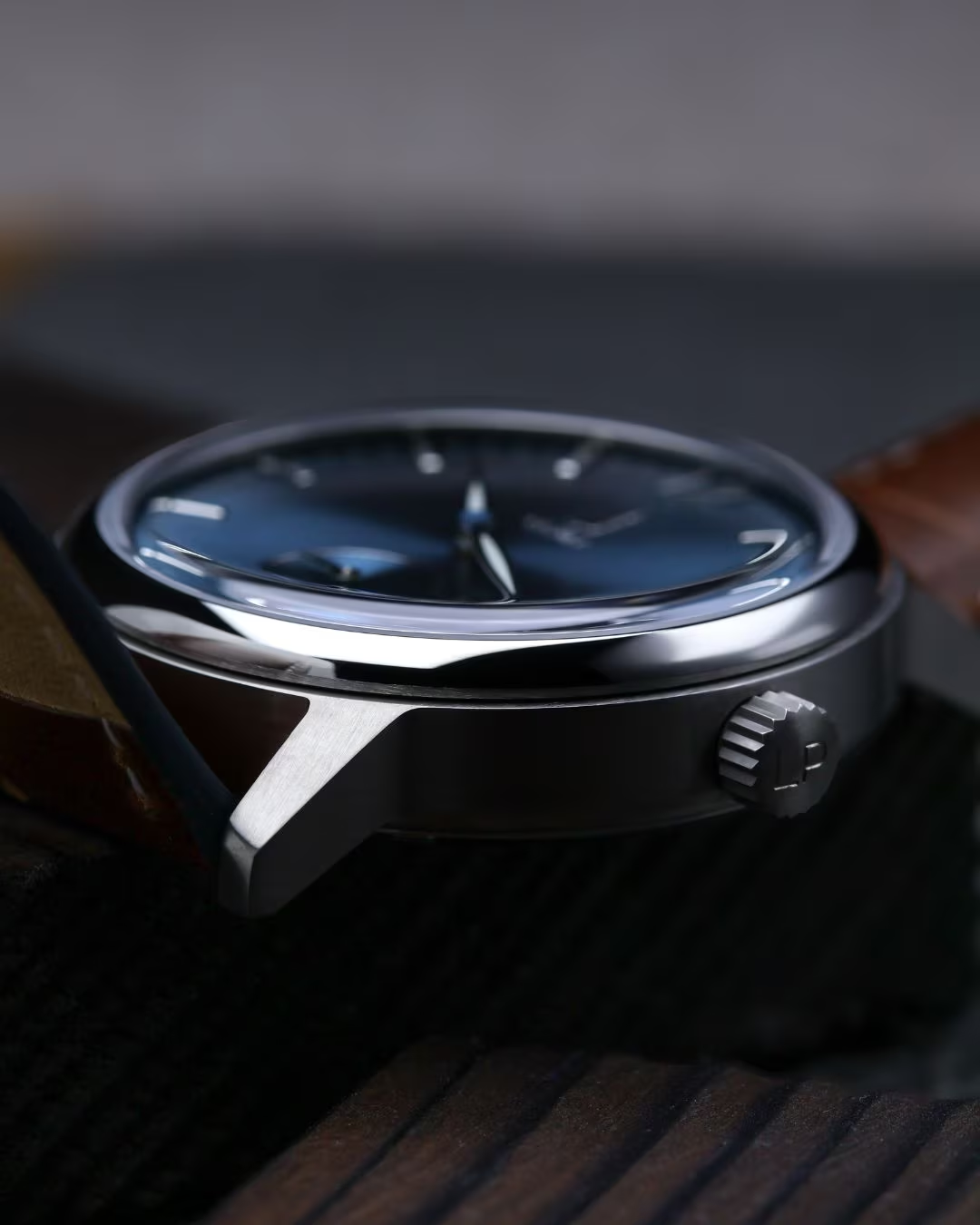
Operating Instructions
Le Pin was created around one idea: Stand Tall. Not as a slogan, but as a habit. Showing up, staying consistent, and keeping your standards even when it's easier not to. Every Le Pin watch is made to reflect that mindset: purposeful design, dependable mechanics, and lasting build quality. So it feels right on the wrist for years, not weeks.
Movement
Your Le Pin Automatic watch is powered by the Sellita SW261-1, a Swiss-made automatic mechanical movement known for its robust architecture, smooth sweep, and long-term serviceability. The movement winds itself through everyday wrist motion and can also be wound manually via the crown.
Specification
Automatic – 3 hands – small seconds – date
- Central hours and minutes, small seconds at 6 o'clock (7.60 mm center distance)
- Date with quick correction (quickset)
- Automatic winding with ball bearing rotor
- Hacking seconds (stop-seconds function)
- 28,800 vibrations per hour (4 Hz)
- 31 jewels
- Typical power reserve: 41 hours
Winding & setting instructions
Your Sellita SW261-1 uses a crown with three functional positions:
- Position 0 — crown fully pushed in (normal wear / manual winding)
- Position 1 — crown pulled out one click (quick date setting)
- Position 2 — crown pulled out fully (time setting; may include hacking seconds depending on version)
1) Manual winding (Position 0 / crown fully pushed in)
- Turn the crown clockwise (forward) using short, gentle turns.
- If the watch has stopped and you want to “wake it up,” give it 30–40 turns. It should start running and you can then wear it normally.
- If you wear your watch daily, the automatic rotor will maintain the power reserve. If you haven't worn it for a while, we recommend a quick manual wind before putting it on (around 10–20 turns) to help the movement reach a stable amplitude quickly.
- Important: if you feel unusual resistance or any “catching,” stop — never force the crown.
2) Date setting (Position 1 / crown 1 click out)
Do not change the date during the “danger zone” when the movement is in the middle of the date-change cycle — approximately 9:00 PM to 3:00 AM. The date mechanism is partially engaged and forcing it can cause damage.
Safe method
- Pull the crown to Position 2 (time setting) and move the hands to a safe time, e.g. 6:00.
- Push/pull the crown to Position 1 and set the date to the desired number.
- Return to Position 2 and set the correct time.
3) Time setting (Position 2 / crown fully out)
- When setting the time, it's best to move the hands forward (clockwise).
- If your SW261-1 is equipped with hacking (the seconds hand stops in Position 2), you can synchronise precisely by pulling the crown to Position 2, waiting for the exact “click” of the full minute, then pushing the crown back in to start the watch.
After winding or setting (important for water resistance)
When you're done winding or setting, always confirm the crown is fully pushed in (Position 0) before any contact with water.
Care & maintenance
A mechanical watch is a small, high-precision machine made of many moving parts working together. With time, normal wear and aging of lubricants can affect accuracy and performance. A little day-to-day care — and periodic servicing — helps your Le Pin stay reliable for decades.
Avoiding extremes (temperature & magnetism)
Protect your watch from extreme temperatures and strong magnetic fields, which can impact accuracy. Be mindful around speakers and high-end audio equipment, induction hobs, some kitchen appliances, medical devices, and strong electronic accessories.
Water resistance
Always make sure the crown is fully pushed in and secured before any contact with water. After exposure to saltwater, rinse the case gently with fresh water and dry it to help prevent corrosion and residue buildup.
Cleaning
Wipe the case and crystal with a soft, dry microfiber cloth to remove dust, perspiration, and fingerprints. If needed, use a lightly damp cloth on the case, then dry immediately. If your watch is on a leather strap, avoid soaking the strap.
Shock protection
Avoid drops, strong impacts and strong vibrations. Mechanical movements are robust, but sharp shocks can disturb internal components and affect timekeeping.
Strap care
Your Le Pin strap is made of 100% Italian vegetable-tanned leather — a natural, premium material chosen to age beautifully and develop a personal patina over time. Early creases, slight darkening, and a softer feel are normal and part of the classic look.
Daily care
- After wearing, give the strap a quick wipe with a soft, dry cloth to remove sweat and dust.
- Let it air out before storing your watch in a closed box, especially in warmer months.
Avoid water & chemicals
- Leather and water don't mix. If possible, avoid showering, swimming, or heavy rain while wearing the leather strap.
- Keep it away from perfume, sunscreen, insect repellent, cleaning products, and alcohol-based sanitizers, which can stain or dry out the leather.
If it gets wet
- Remove the strap from the wrist and pat dry with a soft cloth (don't rub aggressively).
- Let it dry naturally at room temperature.
- Do not use a hairdryer, radiator, direct sunlight, or any heat source — heat can cause the leather to warp, crack, or stiffen.
Conditioning (occasionally)
- Every few months (or when the strap looks dry), apply a small amount of neutral transparent leather cream to the outer side only.
- Work it in gently with a soft cloth, let it absorb, then buff lightly.
- Avoid over-conditioning — too much product can soften the strap excessively and attract dirt.
Storage tips
- Store the watch in a cool, dry place.
- If you rotate straps, keep leather straps flat or gently curved, away from humidity.
- Avoid leaving the strap pressed tightly against sharp edges or buckles for long periods to reduce permanent creasing.
Rotation & longevity
If you wear your watch daily, consider rotating between straps to let the leather rest and dry — it can significantly extend strap life.
Professional servicing
We recommend a full service every 5 to 7 years, depending on how often you wear your watch and the conditions it's exposed to (humidity, dust, shocks, temperature changes, and so on). Like any precision mechanism, a mechanical movement relies on clean components and correctly aged lubricants. Over time, oils gradually dry out or migrate, which can increase friction and wear, even if the watch still appears to run normally.
What a full service typically includes
- Full disassembly of the movement
- Ultrasonic cleaning of components to remove old oils and microscopic debris
- Inspection of key wear points and replacement of worn parts if needed
- Fresh lubrication with the correct oils and greases in the correct places
- Reassembly and regulation to bring timekeeping back within specification
- Functional checks (winding system, setting mechanism, date change, power reserve behaviour)
- Case and sealing inspection, including gaskets, to help maintain water resistance (and replacement of seals when required)
- Final quality control, typically including timekeeping checks in multiple positions
When to service sooner (don't wait 5–7 years)
Arrange servicing immediately if you notice:
- A sudden change in accuracy (running very fast or slow compared to normal)
- The seconds hand “stuttering,” stopping, or running inconsistently
- Reduced power reserve, or the watch stops much sooner than usual
- Moisture or fogging under the crystal
- Difficulty winding or setting (grittiness, slipping, unusual resistance)
- The crown not feeling secure or not seating properly
- Any significant shock event (a hard drop or impact)
Water resistance note
Water resistance is not permanent. Seals age and compress over time, so if you regularly expose your watch to water (or plan to), it's a good idea to have periodic gasket checks and water-resistance testing.
Support
Le Pin Watches is operated by Simon Innotech d.o.o., Ulica Baščanske Ploče 5, 10430 Samobor, Croatia.